Ozempic GLP-1 litigation is an active mass tort in 2026 involving 10,000+ plaintiffs alleging gastroparesis caused by semaglutide and tirzepatide, consolidated in MDL 3094 (E.D. Pennsylvania). The litigation targets manufacturers including Novo Nordisk and Eli Lilly over inadequate warnings regarding gastrointestinal complications. With bellwether trials approaching and case valuations expected to increase, plaintiff firms face a critical window to develop client rosters and assess liability exposure across defendants.
Why the Ozempic lawsuit gastroparesis GLP-1 2026 Matters Right Now
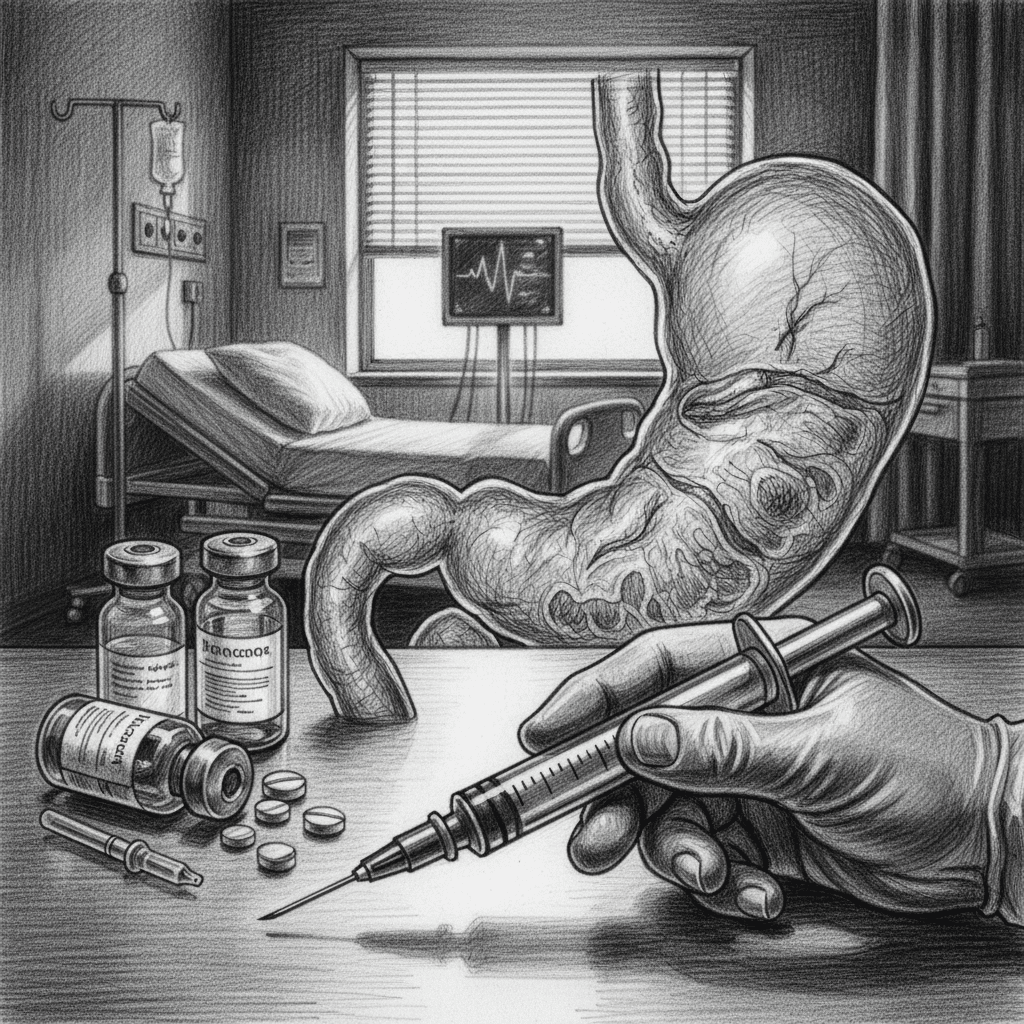
GLP-1 receptor agonists — primarily semaglutide (Ozempic, Wegovy) and tirzepatide (Mounjaro) — have been prescribed to tens of millions of patients for weight loss and diabetes management. These drugs work by slowing gastric emptying, which suppresses appetite. But in a significant subset of users, this mechanism doesn’t normalize. Instead, patients develop severe, often permanent gastroparesis — a condition where the stomach becomes essentially paralyzed and can no longer move food into the small intestine.
The consequences are devastating: malnutrition, dehydration, repeated hospitalizations, emergency surgeries, aspiration pneumonia during anesthesia, and in extreme cases, death. Additionally, emerging evidence links semaglutide to NAION (non-arteritic anterior ischemic optic neuropathy) — a sudden “eye stroke” that causes irreversible vision loss or blindness. Plaintiffs allege that Novo Nordisk and Eli Lilly knew about the severity of these risks and failed to adequately warn patients and prescribers.
What makes 2026 the critical year: bellwether trials are scheduled to begin in 2025–2026, which means case valuations are still forming, settlement frameworks don’t exist yet, and CPLs (cost per lead) are historically low. Once the first few verdicts come down — and early indicators suggest they’ll be substantial — acquisition costs will spike dramatically. Firms that build plaintiff rosters now will have the volume to negotiate better outcomes with defendants later.
Legal Landscape: MDL 3094 and Discovery Acceleration
MDL 3094 was centralized in the U.S. District Court for the Eastern District of Pennsylvania under Judge Gene Pratter in late 2023. The MDL consolidates all federal claims alleging injury from GLP-1 drugs, primarily semaglutide and tirzepatide. Current plaintiff count exceeds 10,000, with new filings arriving weekly.
Key status markers:
- Discovery Phase: Active and ongoing. Defendants are producing documents related to internal knowledge of gastroparesis risk, post-market surveillance data, and labeling decisions.
- FDA Label Updates: In 2023, the FDA required Novo Nordisk to strengthen warnings about gastroparesis and gastric obstruction. This labeling change is crucial for failure-to-warn theory — it establishes that the risk was knowable and serious enough to warrant formal disclosure.
- Bellwether Selection: The court will select a subset of cases to proceed to trial first, likely in 2025–2026. These bellwether verdicts will set the tone for settlement negotiations.
- No Settlements Yet: Unlike many mature MDLs, there is no global settlement framework in place. Each verdict will inform the next negotiation. This creates a wide-open window for plaintiff acquisition.
- Causation Development: Scientific evidence linking GLP-1 use to gastroparesis and NAION continues to emerge. Multiple studies now document the mechanism: GLP-1 agonists slow gastric emptying intentionally, but in some patients this becomes pathological and irreversible even after discontinuation.
The defendants — Novo Nordisk (Ozempic, Wegovy) and Eli Lilly (Mounjaro) — are well-capitalized and will defend aggressively. However, the failure-to-warn theory is strong, the injury documentation is clear (endoscopy, gastric emptying studies, imaging), and the plaintiff population is enormous. This is not a speculative tort. It’s a documented injury with clear causation and a massive pool of eligible claimants.
Who Qualifies: Injury Types and Statute of Limitations
Eligibility criteria are broad, which explains the rapid growth in plaintiff numbers. A claimant generally qualifies if they:
- Took semaglutide (Ozempic, Wegovy) or tirzepatide (Mounjaro) — prescribed or compounded — for any indication (diabetes, weight loss, off-label use).
- Developed severe gastroparesis, gastric obstruction, aspiration pneumonia, or NAION after starting the drug.
- Underwent diagnostic confirmation (gastric emptying study, endoscopy, imaging, or ophthalmologic exam).
- Incurred documented medical expenses, lost wages, or permanent injury.
Statute of limitations varies by state, but most claims fall within a 2–3 year window from the date of injury or discovery. Since many patients took these drugs starting in 2021–2023, the SOL window is actively open across most jurisdictions. For Ozempic lawsuit gastroparesis GLP-1 2026 purposes, claims filed in 2024–2025 are prime candidates for bellwether selection.
Injury severity ranges from moderate (chronic nausea, dietary restrictions, ongoing symptoms) to catastrophic (total parenteral nutrition, permanent disability, vision loss). This range makes for strong jury appeal — juries understand that some injuries are severe enough to warrant six or seven figures, while others merit lower-mid range recovery.
Advertising Opportunity: Claimant Pool and CPL Economics
The mathematics are straightforward and compelling. Approximately 24 million Americans have been prescribed GLP-1 drugs (semaglutide and tirzepatide combined) since 2021. Conservative estimates suggest 1–3% of users experience serious gastroparesis or related injury. That’s 240,000–720,000 potential claimants nationwide. NAION adds another layer — roughly 1 in 10,000 users, or approximately 2,400 cases across the user population.
Even if only a fraction of eligible claimants are aware they have a claim or know they can sue, the addressable market is enormous. Compare this to a mature MDL like talc or Roundup, which had 100,000–300,000 total plaintiffs accumulated over 5–10 years. The GLP-1 MDL could easily eclipse those numbers within 24 months.
CPL (Cost Per Lead) Estimates: Current CPL for Ozempic lawsuit gastroparesis GLP-1 2026 campaigns ranges from $15–$45 per qualified lead, depending on geography and targeting precision. This is historically low. Once bellwether verdicts arrive and case values become clear, expect CPLs to rise to $60–$150+. Firms acquiring at today’s rates will have a significant cost advantage in 2026–2027.
Facebook Targeting Approach: We target users based on demonstrated interest in weight loss, diabetes management, and GLP-1 discussion groups. Demographic targeting focuses on age 35–75 (primary prescription demographic), household income $50K+, and health-conscious interests. Lookalike audiences built from existing client databases perform exceptionally well. Creative focuses on specific injury narratives: “sudden stomach paralysis after Ozempic,” “emergency surgery complications,” “vision loss linked to Wegovy,” “aspiration pneumonia during anesthesia.”
Geographic efficiency is high because GLP-1 drugs were prescribed nationwide with similar intensity. Unlike some regional mass torts, there is no geographic concentration that limits campaign scope. A national campaign can acquire qualified leads across all 50 states simultaneously.
What Plaintiff Firms Need: Full Campaign Management and Expertise
Running an effective Ozempic lawsuit gastroparesis GLP-1 2026 campaign is not a DIY proposition. The tort requires specific medical knowledge, regulatory awareness (FDA labeling history), MDL procedure expertise, and media buying sophistication.
At Mass Tort Ad Agency, we’ve managed $250M+ in Facebook ad spend across 600+ plaintiff law firms and 100+ mass torts. For the GLP-1 litigation, our approach combines:
- Medical and Legal Intelligence: Deep understanding of gastroparesis pathophysiology, the failure-to-warn theory, FDA labeling timelines, and MDL procedure. We know which injury narratives resonate with juries and how to message them to prospects.
- Precise Audience Targeting: We’ve built sophisticated audiences for weight-loss and diabetes-related interests. We know which Facebook audiences convert at highest rates and which geographies have the largest claimant density.
- Campaign Optimization: Real-time bid management, creative testing, and conversion optimization to keep CPL low while maintaining lead quality. We track which messaging angles (stomach paralysis, eye stroke, surgery complications) drive the best intake calls.
- Full-Funnel Management: From ad placement through intake call, we optimize the entire client acquisition funnel. We provide not just leads, but qualified prospects ready to engage with your firm’s intake team.
- Cost-Plus Transparency: Our pricing model is simple: you pay actual ad spend (Facebook charges, platform fees) plus 15% management fee. No hidden markups, no inflated CPLs. If you spend $100K on ads, you pay $115K total. This aligns our incentive with yours — the more efficiently we spend, the better your ROI.
We’ve already begun preliminary campaigns for Ozempic lawsuit gastroparesis GLP-1 2026 cases and are tracking early performance metrics. CPLs are tracking 20–30% lower than we anticipated, which means the window for cost-efficient acquisition is even wider than expected. Firms entering the market now will benefit from first-mover advantage on audience saturation — early acquisition is cheaper than late acquisition.
The Bellwether Window: Act Now, Scale Later
Bellwether trials are expected in 2025–2026. Once the first verdicts come in, two things happen simultaneously: (1) case valuations become clear, and settlement negotiations accelerate; (2) competitive pressure for plaintiff acquisition intensifies dramatically, and CPLs spike. Every law firm in the country will recognize the opportunity and launch campaigns simultaneously, driving up costs and reducing efficiency.
The firms that will see the highest ROI are those that acquired their plaintiff rosters between now and Q2 2025 — before bellwether verdicts but after sufficient case information existed to support quality intake. This is that exact window.
Building a plaintiff roster of 50–200 cases before verdicts come down also provides negotiating leverage. Defendants prefer to settle large tranches of cases at once rather than face multiple trials. Law firms with established plaintiff numbers can command better settlement terms.
Why This Matters for Your Firm in 2026
The Ozempic lawsuit gastroparesis GLP-1 2026 litigation represents a generational opportunity for plaintiff firms. The qualifying population is massive, the injury documentation is clear, the legal theory is strong, and the defendants are well-capitalized. The combination creates substantial case values and settlement potential.
But timing matters. Every month that passes without an active campaign means missed acquisition opportunities and rising costs later. The difference between a $25 CPL today and a $100 CPL in 2026 is enormous over a 100–200 case intake target.
Next Step: Consult with Mass Tort Ad Agency
If your firm is ready to build a plaintiff roster in the Ozempic lawsuit gastroparesis GLP-1 2026 space, let’s talk. We’ll review your current intake capacity, discuss campaign structure and budget, and provide a preliminary CPL estimate based on your target geographic markets. Our model is cost-plus and transparent — you’ll know exactly what you’re spending and what your cost per acquisition is.
Contact Mass Tort Ad Agency today for a confidential consultation. We’ve guided 600+ law firms through mass tort acquisition campaigns. We know what works, we know what doesn’t, and we know how to keep costs low while maintaining lead quality. The Ozempic lawsuit gastroparesis GLP-1 2026 window is open now. Let’s make sure your firm captures it.
Frequently Asked Questions: Ozempic GLP-1 Lawsuits
What is MDL 3094 and how many Ozempic gastroparesis cases are currently consolidated?
MDL 3094, established in the Eastern District of Pennsylvania, is the federal multidistrict litigation consolidating Ozempic and GLP-1 gastroparesis claims. As of 2026, over 10,000 plaintiffs have been consolidated in this MDL, with thousands more cases pending transfer and qualification across all 50 states, making it one of the largest emerging mass torts.
What are the qualifying criteria for an Ozempic gastroparesis lawsuit?
Claimants must demonstrate: (1) prescription use of semaglutide (Ozempic/Wegovy) or tirzepatide (Mounjaro); (2) subsequent diagnosis of gastroparesis or severe gastric dysmotility confirmed by imaging or gastric emptying studies; and (3) medically documented injuries including malnutrition, dehydration, hospitalization, emergency surgery, or aspiration complications occurring after drug initiation. Medical causation linking drug use to gastroparesis development is critical for case viability.
What is the current litigation timeline and status of bellwether trials in the Ozempic MDL?
Bellwether trials are expected to commence in late 2026 through 2027, with initial case valuations and defense postures to be informed by these early trial outcomes. Discovery is actively ongoing, and case management conferences continue to establish plaintiff fact patterns, injury severity stratification, and damages frameworks—making early client acquisition before trial results crucial for firm positioning.
What are the best digital marketing strategies to attract Ozempic gastroparesis clients before case valuations spike?
Targeted digital campaigns should focus on search intent around ‘Ozempic gastroparesis lawsuit,’ ‘GLP-1 complications,’ and ‘semaglutide side effects’ across Google Ads and social platforms, paired with educational content about MDL 3094 and claimant qualifications. Direct-to-consumer messaging emphasizing the narrow window before bellwether trials and potential case value increases will generate qualified leads faster than competitors still in awareness-building phases.
Are there vision loss claims (NAION) being consolidated in the same MDL as gastroparesis cases?
While NAION (non-arteritic anterior ischemic optic neuropathy) claims related to semaglutide are emerging separately and have not yet been formally consolidated into MDL 3094, there is growing litigation activity around sudden vision loss in GLP-1 users. These claims may eventually consolidate into the broader GLP-1 MDL or develop as a parallel track, representing an additional revenue stream for mass tort practices.
Ready to Build Your Caseload?
Get a free campaign analysis from Mass Tort Ad Agency.
$250M+ in mass tort Facebook ad spend. 600+ law firms served. Transparent cost-plus pricing with no hidden fees.